Best ESD 3D Printer Filaments for Electronics and Functional Printing
When working with sensitive electronics or projects requiring electrostatic discharge (ESD) safety, selecting the right 3D printer filament is crucial. This guide highlights the best ESD-safe and conductive 3D printer filaments designed to meet the demands of electronics prototyping, housings, and electrostatic-sensitive applications. Below is a summary table of the top selected filaments known for their conductivity, durability, and compatibility with most FDM 3D printers.
| Filament | Brand | Type | Weight | Diameter | Key Features |
|---|---|---|---|---|---|
| Fiberon PETG-ESD Filament | POLYMAKER | PETG (ESD Safe) | 0.5 kg | 1.75 mm | Electrostatic discharge safe, heat resistant, durable, high-performance composite filament |
| Conductive TPU Filament | RepRapper | Flexible TPU (Electrically Conductive) | 2.2 lb (1 kg) | 1.75 mm | Flexible, conductive with graphene/carbon, suitable for circuits and sensors |
| PLA Conductive Black Filament | AMOLEN | PLA (Electrically Conductive) | 200 g | 1.75 mm | Good dimensional accuracy, durable, solid black conductive PLA filament |
| Rainbow Upgrade PLA+ Filament | Creality | PLA+ | 1 kg | 1.75 mm | Strong, tough, easy to print, vibrant colors (not conductive) |
| Matte PLA Filament Bundle | ELEGOO | PLA Matte Finish | 8 x 250 g spools | 1.75 mm | Multi-color matte finish, high accuracy, not specifically conductive |
Polymaker Fiberon PETG-ESD Filament 1.75mm Black

The Polymaker Fiberon PETG-ESD filament integrates nano carbon tubes to provide excellent electrostatic discharge safety, making it suitable for electronics applications where static protection is crucial.
- Dedicated to high-performance composite materials designed for ease of printing and durability.
- Optimized for high-speed printing with excellent compatibility across mainstream and entry-level 3D printers.
- Superior heat resistance, strength, and toughness ideal for jigs, fixtures, functional prototypes, and electronic housings.
This filament is perfect for professionals and hobbyists needing parts that resist static discharge while maintaining mechanical robustness and print quality.
Reprapper Conductive TPU Filament 1.75mm Black
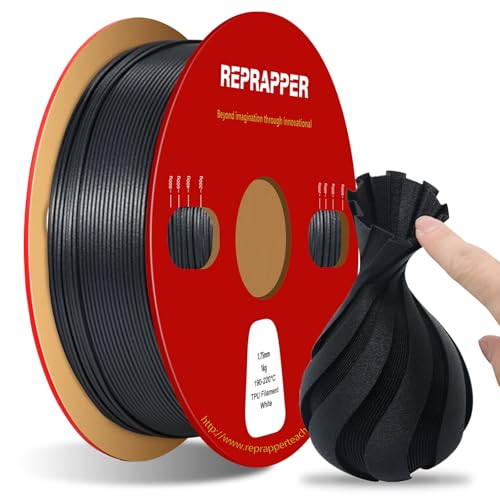
This flexible TPU filament infused with conductive graphene and carbon offers electrical conductivity combined with the versatility of TPU’s flexible nature.
- Ideal for 3D printing circuits, switches, sensors, and protective covers requiring ESD functions.
- Best suited for dry condition environments and research purposes, especially in university or institute projects.
- Conductivity depends on print parameters such as infill rate and part geometry, offering customizable resistance levels.
The filament delivers a unique balance of flexibility and electrical conductivity, expanding options for functional and interactive 3D-printed electronics.
AMOLEN Conductive Black PLA Filament 1.75mm

This electrically conductive PLA filament stands out for precision and functional applications in circuits and lighting components that require conductivity with the ease of PLA printing.
- Dimensional accuracy of +/- 0.03 mm ensures smooth and reliable 3D printing.
- Compatible with most FDM printers with recommended printing temperature of 230℃-280℃.
- PLA-based filament offers excellent durability, toughness, and a consistent solid black finish.
Ideal for designers and developers creating creative electronic parts with moderate conductivity requirements, combining practicality with artistic applications.
Creality Rainbow Upgrade PLA+ Filament 1.75mm, 1kg

While not specifically ESD-safe or conductive, the Creality PLA+ filament is a strong, tough, and reliable material for general 3D printing needs requiring enhanced toughness and smooth finishes.
- Enhanced toughness reduces breakage and improves model durability compared to standard PLA.
- Patented clog-free design supports smooth extrusion with excellent print consistency.
- Available in multiple colors with dimensional accuracy of +/- 0.02mm, fitting most 1.75mm FDM printers.
This filament suits users seeking robust and visually attractive prints but is not specialized for ESD or conductivity requirements.
ELEGOO Matte PLA Filament 8-Color Bundle 1.75mm

The ELEGOO Matte PLA filament bundle offers excellent color variety and matte finish quality but does not feature conductive or ESD-safe properties.
- Includes eight color spools each with 250g, totaling 2kg for versatile printing options.
- Matte finish achieves low gloss and smooth texture with nearly invisible layer lines.
- High dimensional consistency of +/-0.02 mm ensures printing precision and reliability.
This bundle is ideal for users focusing on aesthetics and color variety rather than electronics-specific conductivity.
Buying Guide for ESD and Conductive 3D Printer Filaments
Choosing the best ESD or conductive 3D printer filament involves several important factors to ensure your prints meet functional and safety requirements:
Electrostatic Discharge (ESD) Safety
For applications involving sensitive electronics, filaments with built-in ESD-safe properties reduce static buildup that can damage components. Look for materials infused with conductive additives like carbon nanotubes or graphene that achieve this property.
Electrical Conductivity
If your project requires actual electrical conductivity—such as printing circuits, sensor covers, or capacitive touch devices—select filaments specifically labeled as conductive. Note conductivity can vary by infill density, length, and filament composition. Flexible options like TPU enhance versatility where flexibility is needed.
Material Compatibility and Printability
Consider the filament’s compatibility with your 3D printer and the printing conditions it requires, such as nozzle temperature, bed temperature, and print speed. ESD-safe filaments are often PETG-based for their durability and heat resistance, while conductive filaments might be PLA or TPU blends.
Mechanical Properties
Depending on the intended use, mechanical strength, durability, and heat resistance are key. PETG filaments typically offer tougher results, whereas PLA variants offer easier and more accurate printing with less warping but reduced toughness.
Dimensional Accuracy and Consistency
Filament diameter consistency ensures smooth feeding and precise prints, especially critical for electronics parts where tolerance matters. Look for filaments with tight dimensional accuracy (±0.02 mm or better).
Color and Finish
While not directly related to ESD or conductivity, filament color and surface finish might be important to your project’s aesthetic needs. Matte and solid black are common for electronic housings and functional parts.
Print Volume and Spool Size
Evaluate how much filament you require, especially for longer or multiple projects. Large spools provide more material but ensure your printer supports the spool dimensions and weight.
By balancing these considerations, you can select the optimal filament to ensure reliable, static-safe, and functional 3D prints for electronics and ESD-sensitive environments.